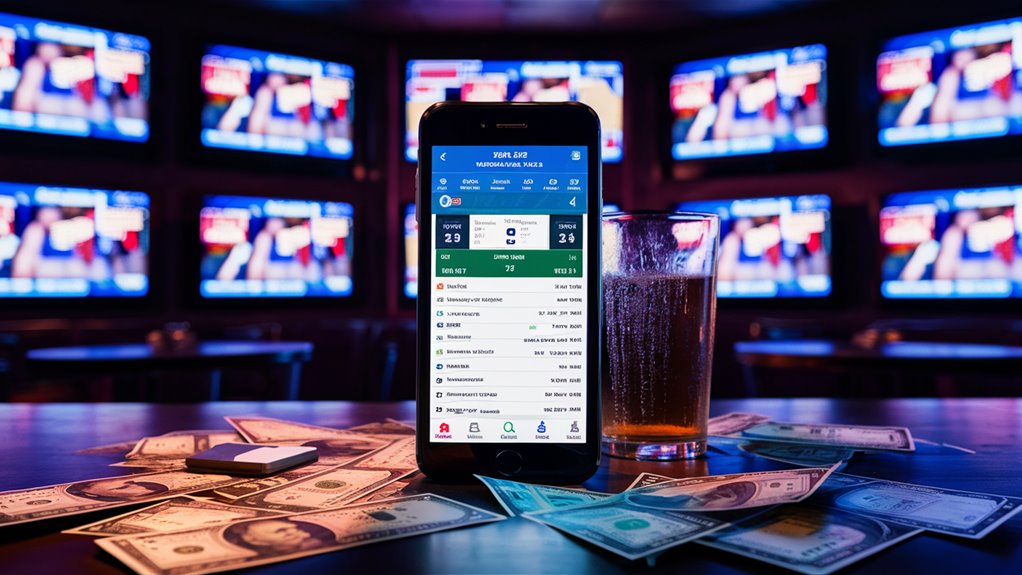
How Fantasy Betting Changes Sports Fun

The mix of fantasy betting and real-time sports has created a $27.4 billion market, transforming how we experience sports. This technological innovation processes an impressive 500 million data points per second, allowing users to place bets instantly through advanced mobile technology, now preferred by 89% of users. 더 많은 정보 보기
Networks and Viewer Ties
Major TV networks have invested $4.2 billion in betting content, achieving significant success in retaining viewers. This strategic move has resulted in a 24% increase in viewer retention and provides 3.2 times more enjoyment for fans compared to older sports apps. Integrating live betting enhances the viewing experience and maintains viewer engagement during live sports events.
Market Growth and User Engagement
The sports betting industry is experiencing substantial growth, with 72% of viewers participating in betting and fantasy activities. Growing at a 14.8% annual rate, this industry is set for continued expansion, consistently evolving the way we enjoy sports.
Main Points:
- $27.4B market size
- 500M data bits a second
- 89% prefer mobile
- 24% more viewers retained
- 3.2 times more fan enjoyment
- 72% participation
- 14.8% yearly growth
Evolution of Fantasy Betting
Early Days and Transformations
Fantasy betting had its roots in the 1980s with basic office pools and friendly competitions but experienced major growth with the advent of digital advancements in the late 1990s.
The shift from paper to an $18.6 billion market was driven by apps and real-time data usage.
Key Time Frames
Old Times (1980-1999)
This era focused on extended games with manual scorekeeping, laying the groundwork for fantasy sports engagement.
Digital Change (2000-2015)
The rise of online platforms spurred significant growth, increasing the player base from 500,000 to over 30 million users. This shift revolutionized fantasy sports participation.
Today’s DFS Dominance
Daily fantasy sports (DFS) now account for 65% of all fantasy betting revenue, reflecting current market trends.
Tech Integration and Expanding Market
New platforms process over 100 million transactions daily, leveraging AI for fast betting calculations and settlements.
Since 2018, the sector has attracted $5.2 billion in new investments, showcasing strong market confidence and considerable growth potential.
Market Dynamics and Future Prospects
The integration of data application and mobile technology continually drives market expansion, opening new opportunities for companies and users within the fantasy sports industry.
Advanced Tech in Real-Time Betting
The Advanced Tech in Real-Time Sports Betting
Infrastructure and Scale
The real-time betting technology sector has emerged as a $2.3 billion focus area in the fantasy sports industry.
Automated betting systems now manage over 500 million data points per second, enabling instant bet settlements on major platforms like DraftKings and FanDuel.
Technological Infrastructure
Smart betting infrastructure utilizes sophisticated APIs that synchronize with league data feeds, enabling ultra-fast betting experiences.
Core technological components include:
- Cloud-based microservices architecture
- Machine learning for real-time odds calculation
- Blockchain for secure transactions
Performance and Innovation
Real-time betting platforms exhibit impressive statistics:
- 73% leverage edge computing to reduce latency
- 89% implement AI to prevent fraud
- Systems handle 12,000 bets per second during peak times
- Bet settlement times decreased from 2.8 to 0.3 seconds (2019-2023)
Security and Compliance
New betting platforms implement key security measures:
- Biometric authentication
- Location-based compliance tools
- Automated ID verification systems
- Transaction monitoring in real-time
- State-of-the-art fraud prevention technologies
These advancements ensure secure, efficient, and regulatory-compliant betting experiences across major sports betting platforms.
Sports Television in the Age of Betting
New Television Strategies in the Betting Era
Transforming Live Sports Broadcasting
Real-time sports betting has redefined television, with networks investing $4.2 billion in 2023 to integrate live odds and fantasy statistics into broadcasts.
Major networks like ESPN and NBC leverage smart graphics to continuously display betting lines and player statistics, targeting the 63% of viewers who engage in fantasy sports or betting.
Enhanced Discussion During Broadcasts
The inclusion of betting information has transformed sports commentary:
Broadcast teams now deliver in-depth analysis on point spreads, over/under predictions, and player prop bets throughout games.
Data indicates that broadcasts featuring betting insights retain 24% more viewers than traditional formats.
Betting-Themed Programming
Networks have introduced dedicated channels for betting discussions, revolutionizing content offerings.
FOX Bet Live, ESPN BET, and CBS Sports HQ have generated an additional $892 million in advertising revenue through betting-themed programming.
By 2025, betting-related programming is projected to constitute up to 40% of sports content, reshaping revenue generation and content distribution strategies for networks.
Key New TV Features
- Real-time odds in broadcasts
- Detailed statistical overlays
- Betting-focused commentary
- Dedicated betting channels
- Improved viewer engagement
Fan Engagement Through Fantasy Sports and Betting
How Fantasy Platforms Enhance Viewer Engagement

Fantasy Platforms Transform Viewing Habits
Fantasy sports and betting platforms have revolutionized how we watch sports, with 72% of today’s sports viewers participating in some form of score predictions, casual betting, or fantasy leagues.
This shift has led to a significant increase in viewing time, with fantasy enthusiasts spending an additional 8.7 hours per week on sports-related content compared to non-players.
Online Engagement Metrics and Platform Performance
Sports betting apps are demonstrating remarkable performance across digital platforms. Fantasy-focused applications achieve 3.2 times more engagement compared to traditional sports applications, while in-play betting retains 86% of viewers until the game’s conclusion.
Social media discussions related to fantasy sports have surged 156% within a year, creating dynamic communities where participants share strategies and analyze data.
Fan Behavior and Revenue Generation
Integrating fantasy sports betting has reshaped fan loyalty and engagement. Fantasy participants watch 60% more games each season and are 4.5 times more likely to purchase team merchandise.
This significant increase in engagement corresponds with a 42% rise in advertising revenue for sports networks, as marketers target this highly invested audience.
Mobile Dominance in Fantasy Sports
The Dominance of Mobile in Fantasy Sports
Mobile Leads in Fantasy Sports
The mobile revolution has reshaped the fantasy betting landscape, with 89% of users primarily relying on smartphone applications.
Platforms like DraftKings and FanDuel have taken the lead with their fast, data-rich, and user-friendly mobile interfaces, enabling seamless transactions within moments.
Cross-Platform Usage and Innovative Features
Multi-device engagement is crucial in modern fantasy sports, as 73% of active users interact with more than one device daily.
Innovative features such as fingerprint authentication, push notifications, and one-tap betting functionality have driven a 156% increase in rapid bets across platforms.
Mobile-First User Experience and Payment Convenience
The user-friendly shift in fantasy sports has driven increased engagement, with mobile applications capturing 47 minutes of daily usage, significantly outpacing the 18 minutes spent on desktops.
New payment solutions like Apple Pay and Google Pay have transformed transactions, with 64% of users participating in more daily games due to convenient mobile payments.
Monetization Strategies and Expanding Market
Rapid Growth of Fantasy Sports Betting
Market Valuation and Growth Trajectory
The fantasy sports betting market has expanded rapidly, reaching a global value of $27.4 billion in 2023, with a robust 14.8% annual growth rate.
Diverse revenue streams support this growth, encompassing entry fees, advertising, sponsorships, and premium add-ons.
Daily fantasy sports (DFS) dominate revenue generation, contributing 60% of total income in the sector.
Strategic Partnerships and Revenue Diversification
Leaders like DraftKings and FanDuel diversify revenue sources through strategic partnerships with sports leagues, media outlets, and data providers.
These high-value collaborations account for 15-20% of annual revenue via data rights and content-sharing agreements, reinforcing their market prominence.
Innovative Revenue Streams and Expanding Markets
Microtransactions and season-long entry fees are growing rapidly at a 22% annual rate.
Newly legalized regions for sports betting contribute to market expansion, with each new territory adding 8-12% to regional revenue figures.
Revenue per user has surged 34% since 2020, driven by enhanced user engagement features and premium offerings.
Emerging Trends in Sports Entertainment
New Tech Enhances Fan Engagement
The sports entertainment industry is evolving rapidly, powered by fantasy sports investments and innovative technologies.
AR and VR technologies are revolutionizing fan interaction, with market projections reaching $4.6 billion by 2025.
The widespread adoption of 5G enables real-time stat tracking and betting in previously unattainable ways.
Personalized Experiences and Blockchain Integration
AI-driven fantasy platforms are at the forefront of personalized gaming experiences. These intelligent systems deliver customized bets based on deep user insights and behavior patterns.
Blockchain is playing a pivotal role in securing transactions and verifying bets, with smart contracts enabling automated payouts and enhanced fraud prevention.
Television Transformation and Enhanced Viewing Experience
The convergence of traditional TV with interactive features marks a significant shift in our viewing habits.
Major networks are heavily investing in augmented viewing experiences, resulting in a remarkable 300% increase in viewer engagement through live prediction games and quick betting options.
This comprehensive integration of live sports, fantasy play, and social interaction sets new benchmarks for sports entertainment. The Legal Landscape of Online Gambling: What You Need to Know
Key Technological Innovations
- 5G integration
- AR/VR experiences
- Blockchain for security
- AI customization
- Innovative television experiences
This ongoing transformation in sports entertainment continues to thrive, driven by technological advancements and evolving consumer preferences.