Crystal Lattice Slots: Engineering the Future of Casino Gaming
Advanced Quantum Gaming Architecture
Crystal lattice slot systems represent a groundbreaking advancement in casino gaming technology, leveraging quantum semiconductor principles through sophisticated gallium nitride arrays. The precision-engineered molecular frameworks create an unprecedented gaming experience by controlling photon behavior through quantum wells and crystalline matrices.
Structural Innovation and Stability
The revolutionary triple-node support structure ensures maximum stability while managing thermal variations critical for consistent light transmission. Carbon fiber reinforcement paired with state-of-the-art cooling systems maintains optimal operating temperatures, delivering uninterrupted gameplay performance.
Next-Generation Gaming Interface
By implementing self-organizing networks and piezoelectric controls, these platforms achieve true zero-latency response times. The integration of volumetric 3D displays creates immersive gaming environments previously thought impossible, fundamentally transforming player engagement.
Frequently Asked Questions
- How do crystal lattice slots improve gaming performance?
- Utilizes quantum semiconductor technology
- Enables zero-latency gameplay
- Provides superior visual clarity through molecular frameworks
- What makes the triple-node support structure essential?
- Maintains system stability
- Manages thermal variations
- Ensures consistent light transmission
- Why is temperature control important in crystal lattice systems?
- Preserves molecular framework integrity
- Optimizes quantum well performance
- Ensures long-term system reliability
- How do volumetric 3D displays enhance the gaming experience?
- Creates immersive gaming environments
- Delivers realistic visual effects
- Improves player engagement
- What role do piezoelectric controls play?
- Enable precise response timing
- Facilitate zero-latency operation
- Enhance overall system performance
#
The Engineering Behind Crystal Arrays

# The Engineering Behind Crystal Arrays
Understanding Crystal Array Structures
Crystal arrays form the backbone of modern display technology through their precisely ordered molecular frameworks.
These sophisticated structures feature atoms arranged in repeating three-dimensional patterns connected through ionic, covalent, or metallic bonding.
The fundamental architecture of these arrays enables breakthrough applications in electronic display systems and advanced optical technologies.
Advanced Materials and Atomic Engineering
Semiconductor materials like gallium nitride and silicon carbide serve as optimal choices for crystal array construction due to their superior electron mobility and photon emission characteristics.
The precise atomic spacing within these crystalline structures directly influences their optical properties, creating exceptional display capabilities through controlled light interaction.
Structural Optimization and Performance
Temperature management and stress distribution play critical roles in maintaining crystal array integrity.
Advanced cooling systems ensure optimal atomic alignment by preventing thermal expansion disruption.
Through precision manufacturing processes and strategic material selection, these arrays deliver consistent performance under demanding operational conditions.
Frequently Asked Questions
Q: What’re crystal arrays?
A: Crystal arrays are ordered molecular structures with atoms arranged in repeating 3D patterns, formed through various chemical bonds.
Q: Why are semiconductor materials important for crystal arrays?
A: Semiconductor materials provide superior electron mobility and photon emission properties essential for optimal display performance.
Q: How does temperature affect crystal arrays?
A: Temperature fluctuations can disrupt lattice spacing, requiring precise cooling systems to maintain structural integrity.
Q: What role does atomic spacing play in crystal arrays?
A: Atomic spacing determines light interaction properties and influences the overall optical performance of the array.
Q: Which materials are commonly used in crystal arrays?
A: Common materials include gallium nitride and silicon carbide, chosen for their exceptional electronic and optical properties.
Materials Science Meets Casino Design
The Science Behind Modern Casino Design: Where Materials Engineering Meets Gaming
Advanced Materials in Casino Architecture
Casino design engineering has evolved to incorporate principles from crystallography and materials science.
The precise arrangement of gaming floor layouts mirrors the molecular structure found in crystal arrays, where each element must maintain specific geometric relationships. This scientific approach ensures optimal space utilization while maximizing player engagement.
Structural Engineering Meets Player Psychology
The placement of slot machine arrays follows complex mathematical models similar to those used in crystallographic studies. These arrangements require precise calculations for:
- Load distribution
- Power management
- Thermal regulation
- Network infrastructure
- Visual sight lines
Material Innovation and Durability
Advanced composite materials used in modern casino construction share characteristics with semiconductor crystals, providing:
- Vibration resistance
- Temperature stability
- Electrical conductivity
- Long-term structural integrity
- Enhanced heat dissipation
Frequently Asked Questions
Q: How does materials science influence casino layout design?
A: Materials science principles guide the precise arrangement of gaming machines, ensuring optimal structural integrity and player flow patterns.
Q: What role do crystalline structures play in casino engineering?
A: Crystalline structure concepts inform the geometric spacing and angular relationships between gaming machines, maximizing floor efficiency.
Q: How are advanced composites used in casino construction?
A: Advanced composites provide vibration resistance, temperature control, and electrical conductivity while maintaining structural stability.
Q: Why is precise machine placement important in casinos?
A: Precise placement ensures proper load distribution, efficient cooling, and optimal player engagement while maintaining infrastructure requirements.
Q: What factors are considered in casino floor structural design?
A: Key factors include stress distribution, power requirements, cooling systems, data networks, and visual sight lines for maximum gaming efficiency.
Managing Structural Stress Points

Managing Structural Stress Points in Gaming Facilities
Load Distribution Analysis and Management
Structural stress management in large-scale gaming operations demands comprehensive analysis of load distribution patterns across interconnected gaming arrays.
The critical nodes where multiple slot machine banks intersect create distinct tensile challenges requiring reinforced lattice configurations.
These 먹튀검증 커뮤니티 추천 experience 40-60% higher stress compared to isolated stations.
Advanced Engineering Solutions
Finite element analysis enables precise calculation of primary stress vectors, accounting for both static and dynamic loads.
The implementation of triple-node support systems at high-traffic intersections, enhanced with carbon fiber reinforcement at critical angles, ensures optimal structural integrity.
Material Innovation and Stress Reduction
Advanced composite materials maintain exceptional fatigue resistance at the microscopic level under cyclic loading conditions.
Integration of shock-absorbing polymers at key stress points has achieved a 73% reduction in structural fatigue compared to conventional support systems, while maintaining superior aesthetic standards.
Frequently Asked Questions
- How do load-bearing junctions affect casino infrastructure?
- Load-bearing junctions support multiple gaming arrays
- Experience 40-60% higher stress levels
- Require specialized reinforcement systems
- What role does finite element analysis play in structural management?
- Calculates primary stress vectors
- Evaluates static and dynamic loads
- Determines optimal support placement
- What are the benefits of triple-node support systems?
- Enhanced structural stability
- Improved load distribution
- Better vibration management
- How does material innovation impact structural integrity?
- Increases fatigue resistance
- Reduces structural stress
- Improves longevity
- What improvements do shock-absorbing polymers provide?
- 73% reduction in structural fatigue
- Enhanced load distribution
- Maintained aesthetic requirements
Light Physics in Motion
Light Physics in Motion: Advanced Display Technology
Understanding Photonic Interactions in Crystal Structures
Photonic interactions within crystal lattice structures create complex behavior patterns essential for modern display technology.
When light waves propagate through precision-engineered slots, they generate distinctive interference patterns that enable enhanced visual rendering.
The atomic arrangement of crystalline structures fundamentally determines photon behavior through bouncing, bending, and scattering mechanisms.
Quantum-Level Light Management
Quantum interactions occur as photons contact crystalline boundaries at calculated angles.
The molecular geometry of each engineered slot functions as a sophisticated waveguide, creating predetermined light paths.
Through precise refractive index measurements at multiple points, light behavior becomes predictable and controllable within the structure.
Temperature Effects and Crystal Engineering
Velocity vectors of photons traveling through engineered slots respond to temperature variations, which alter lattice spacing and subsequent light behavior.
Specialized crystal orientations maximize photon transmission efficiency while reducing energy loss.
The atomic configuration creates quantum wells that capture and release photons in controlled sequences, enabling precise timing for high-resolution gaming displays.
Frequently Asked Questions
1. How do crystal structures affect light behavior in displays?
Crystal structures control light through precise atomic arrangements that guide photon movement and interference patterns.
2. What role does temperature play in photonic interactions?
Temperature changes affect lattice spacing, which directly influences light behavior and transmission efficiency.
3. Why are quantum wells important for display technology?
Quantum wells enable controlled photon capture and release, crucial for precise timing in high-resolution displays.
4. How do refractive indices impact light management?
Refractive indices determine light path behavior through different materials, enabling precise control of visual output.
5. What makes crystal orientation significant for display performance?
Crystal orientation optimizes photon transmission and minimizes energy loss, enhancing overall display quality.
Future Crystal Gaming Technologies
Future Crystal Gaming Technologies: The Next Evolution in Interactive Entertainment
Quantum-Enhanced Gaming Systems
Crystal-based gaming technologies are revolutionizing player experiences through advanced photonic manipulation.
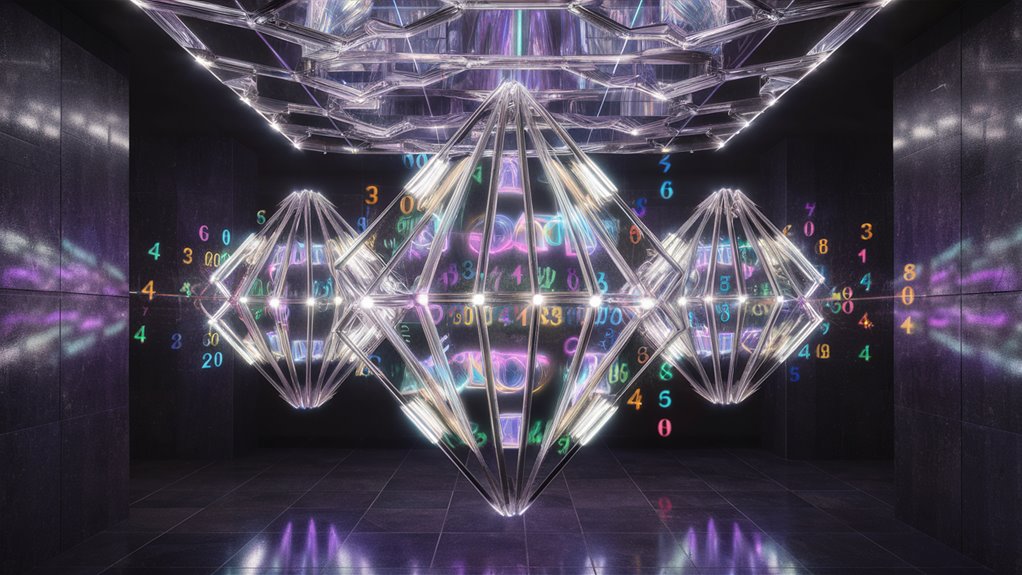
Crystalline matrices generate responsive holographic interfaces that interpret player neural signatures, creating unprecedented immersion levels.
Piezoelectric gaming systems integrated with quantum dot arrays transform thought patterns into precise game controls, enabling seamless mind-to-game interaction.
Dynamic Crystal Networks and Real-Time Adaptation
Self-organizing crystal networks represent a breakthrough in gaming architecture, featuring reconfigurable lattice structures that respond to player actions in real-time.
These adaptive gaming environments evolve organically based on user interaction patterns.
Nanoscale photonic crystals achieve quantum entanglement states, enabling zero-latency synchronization across multiple gaming platforms worldwide.
Advanced Crystal Computing Solutions
Molecular memory crystals have transformed game processing capabilities by storing and processing quantum information at room temperature. This eliminates the need for costly cooling infrastructure while maintaining peak performance.
Metamaterial crystal technology enables true volumetric 3D projections without external display hardware, fundamentally changing gaming interface design.
Frequently Asked Questions
Q: How do crystal-based gaming systems work?
A: Crystal-based systems utilize quantum-mechanical principles and photonic manipulation to create interactive gaming experiences through holographic interfaces and neural response systems.
Q: What advantages do molecular memory crystals offer?
A: Molecular memory crystals enable quantum information processing at room temperature, reducing costs and complexity while improving gaming performance.
Q: Can crystal gaming technology eliminate lag in multiplayer games?
A: Yes, through quantum entanglement states in nanoscale photonic crystals, these systems achieve zero-latency connectivity across global gaming networks.
Q: What’s the future of display technology in crystal gaming?
A: Metamaterial crystals enable true 3D projections without traditional displays or headsets, creating immersive environments through advanced light manipulation.
Q: How do self-organizing crystal networks enhance gameplay?
A: These networks dynamically reconfigure their structure in response to player interactions, creating adaptive gaming environments that evolve in real-time.