Emberlight Blackjack: Mastering Dealer Tell Analysis
Understanding Advanced Pattern Detection
The Emberlight method revolutionizes dealer tell analysis by integrating light pattern interpretation with precise split-hand detection techniques. Through rigorous analysis of dealer mechanics, shoulder movements, and card distribution patterns, players can identify crucial value indicators with unprecedented accuracy.
Optimal Position Strategy
Positions 3-4 at the blackjack table provide superior detection angles, yielding 15-20% enhanced information compared to conventional card counting methods. These strategic spots maximize the visibility of reflection signatures and mechanical tells, giving skilled observers a significant advantage.
Pattern Recognition and Value Verification
Mastering the Emberlight system requires 40-60 hours of dedicated practice, focusing on:
- Suit identification patterns
- Value verification sequences
- Distribution rhythm analysis
- Split-hand amplification signals
Advanced Split-Hand Indicators
The true power of Emberlight detection emerges through slow-burning splits, which amplify subtle dealer indicators and create recognizable patterns in card presentation mechanics.
#
Frequently Asked Questions
Q: How long does it take to master Emberlight techniques?
A: Proficiency requires 40-60 hours of focused practice.
Q: Which table positions are most effective?
A: Positions 3-4 provide optimal visibility and detection rates.
Q: What percentage improvement can be expected over traditional methods?
A: Players can achieve 15-20% better information gathering compared to standard counting.
Q: How does split-hand detection enhance the system?
A: Split-hands create amplified indicators that reveal additional pattern information.
Q: What are the key components of the Emberlight method?
A: Light pattern analysis, dealer mechanics observation, and split-hand detection form the core components.
The Emberlight Methodology Unveiled

The Emberlight Methodology: Advanced Blackjack Strategy Guide
Understanding Core Principles
The Emberlight methodology represents a sophisticated evolution in blackjack strategy, combining traditional card counting with advanced behavioral pattern recognition.
This comprehensive system focuses on identifying and interpreting subtle dealer behaviors during gameplay, creating a multi-layered approach to advantage play.
Primary Tell Categories
Card Preparation Tells
Dealer grip patterns serve as crucial indicators during card preparation. Key observations include:
- Variations in grip pressure
- Finger positioning adjustments
- Card handling dynamics
- Pre-reveal movements
Dealing Motion Analysis
Motion-based indicators manifest through:
- Deal speed variations
- Card delivery arc patterns
- Rhythm disruptions
- Hand movement consistency
Post-Deal Position Assessment
Card placement patterns reveal valuable information through:
- Final card positioning
- Card arrangement angles
- Spacing between cards
- Dealing sequence timing
Advanced Implementation
Critical hand situations provide the most valuable intelligence, particularly during:
- Potential dealer blackjacks
- Ace up-card scenarios
- High-stakes decisions
- Pattern confirmation moments
Frequently Asked Questions
1. How effective is the Emberlight methodology compared to traditional counting?
The system enhances traditional counting accuracy by 15-20% when properly implemented.
2. What is the learning curve for mastering dealer tells?
Most players require 40-60 hours of dedicated practice to develop basic pattern recognition skills.
3. Can dealers be trained to minimize their tells?
While possible, most casinos focus on speed and accuracy rather than tell suppression.
4. Does the methodology work in online blackjack?
The system is designed specifically for live dealer interactions and doesn’t apply to digital platforms.
5. How does casino surveillance view pattern recognition strategies?
Pattern recognition strategies are legal but may attract attention from casino security personnel.
Light Patterns During Card Distribution
Understanding Light Patterns in Card Games
Natural Light Behavior During Card Distribution
Light reflection analysis plays a critical role in understanding card distribution mechanics.
Overhead lighting creates distinctive patterns across playing card surfaces during deals.
The glossy finish of cards produces measurable optical phenomena that vary based on card design and dealing motion.
Key Pattern Characteristics
Position-specific observations from seats 3 and 4 provide optimal viewing angles of natural light interactions.
As cards move across the felt surface, they generate brief but distinct optical signatures:
- Face cards display complex dual-reflection properties
- Number cards produce uniform reflection patterns
- Ten-value cards create characteristic divided light effects
Advanced Pattern Recognition
The most revealing reflection signatures occur during the distribution phase.
The leading edge of moving cards demonstrates unique optical properties.
High-value cards (10s through Aces) typically generate stronger light patterns compared to lower-value cards (2s through 6s), which show more subtle variations.
#
Frequently Asked Questions
Q: What factors influence card reflection patterns?
A: Surface texture, overhead lighting position, and card motion speed all affect reflection characteristics.
Q: Which seating positions provide optimal pattern visibility?
A: Positions 3 and 4 typically offer the clearest view of natural light interactions.
Q: How do face card patterns differ from number cards?
A: Face cards create more complex reflection patterns due to their detailed artwork.
Q: What role does card finish play in pattern formation?
A: Glossy finishes produce more distinct reflection patterns than matte surfaces.
Q: What lighting conditions are ideal for pattern observation?
A: Consistent overhead lighting provides the most reliable conditions for pattern analysis.
Dealer Movement Analysis

Expert Guide to Dealer Movement Analysis in Casino Games
Understanding Basic Dealer Biomechanics
Professional 먹튀검증 온카스터디 dealers exhibit consistent biomechanical patterns during gameplay that create recognizable motion signatures.
Three key movement clusters define dealer actions: card preparation sequences, chip handling patterns, and postural adjustments.
These natural movements follow standardized protocols developed through extensive training.
Analyzing Card Delivery Techniques
Dealers demonstrate distinct shoulder rotation patterns during card distribution that vary based on procedural requirements.
The dealer stance typically maintains a precise distance from the table while executing a standardized dealing motion.
Professional dealers employ smooth, regulated movements optimized for efficiency and consistency.
Card Verification Procedures
The card verification process follows strict timing protocols established by gaming regulations.
Standard peek sequences require precise movements executed within specific timeframes.
Card authentication methods incorporate multiple security checks while maintaining optimal dealing speed.
Dealers utilize refined hand positioning techniques to ensure proper card handling.
Professional Dealing Mechanics
Proper dealing form emphasizes controlled arm movements and precise finger placement.
Dealers maintain consistent delivery speeds while executing standardized card distribution patterns.
Professional dealing mechanics incorporate ergonomic principles to support extended performance periods.
Frequently Asked Questions
- What are the standard dealer movements in casino card games?
- Standardized card distribution
- Chip handling sequences
- Card verification procedures
- Table management movements
- How do dealers maintain consistent dealing mechanics?
- Professional training programs
- Standardized protocols
- Regular performance evaluations
- Ergonomic movement patterns
- What regulations govern dealer card handling?
- Gaming commission standards
- Casino-specific protocols
- Security requirements
- Timing regulations
- Why is dealer movement consistency important?
- Game integrity maintenance
- Operational efficiency
- Player experience consistency
- Security enhancement
- What training do professional dealers receive?
- Dealing mechanics certification
- Security protocol training
- Game-specific procedures
- Customer service standards
Split Hand Detection Techniques
Mastering Split Hand Detection in Blackjack Dealing
Essential Detection Techniques for Professional Dealers
Professional blackjack dealers must master precise detection techniques for identifying split-eligible hands during initial card distribution.
The systematic approach to scanning for paired values begins with careful observation of the first two cards at each betting position.
Maintaining a comprehensive mental checklist of all possible pair combinations (2-2 through A-A) is crucial during the dealing process.
Advanced Visual Identification Methods
Split hand recognition requires developing keen visual awareness and proper positioning techniques.
Dealers employ subtle card positioning methods by adjusting paired cards to create distinctive visual markers without disrupting gameplay flow. This strategic placement enhances split detection while maintaining optimal dealing speed and table efficiency.
Verification and Accuracy Protocols
Card Value Authentication
Split eligibility verification demands thorough confirmation of both card values and suits, even when cards appear identical.
Professional dealers implement systematic verification procedures to differentiate between genuine pairs and similar-looking cards, preventing procedural errors and maintaining game integrity.
## Frequently Asked Questions
Q: What’re the key elements of split hand detection?
A: Essential elements include systematic scanning, value recognition, and precise visual identification of paired cards.
Q: How do dealers maintain game speed while checking for splits?
A: Dealers integrate verification steps into their natural dealing rhythm using practiced techniques and efficient card positioning.
Q: What common errors occur in split hand detection?
A: Common errors include misidentifying similar-looking cards and failing to verify both card values and suits completely.
Q: Why is proper split detection important in blackjack?
A: Accurate split detection ensures game integrity, maintains proper casino procedures, and facilitates smooth player decisions.
Q: What techniques help dealers improve split detection accuracy?
A: Dealers improve accuracy through systematic scanning patterns, mental checklists, and strategic card positioning methods.
Mastering Table Position Advantages
Mastering Table Position Advantages in Casino Games
Strategic Table Positioning Fundamentals
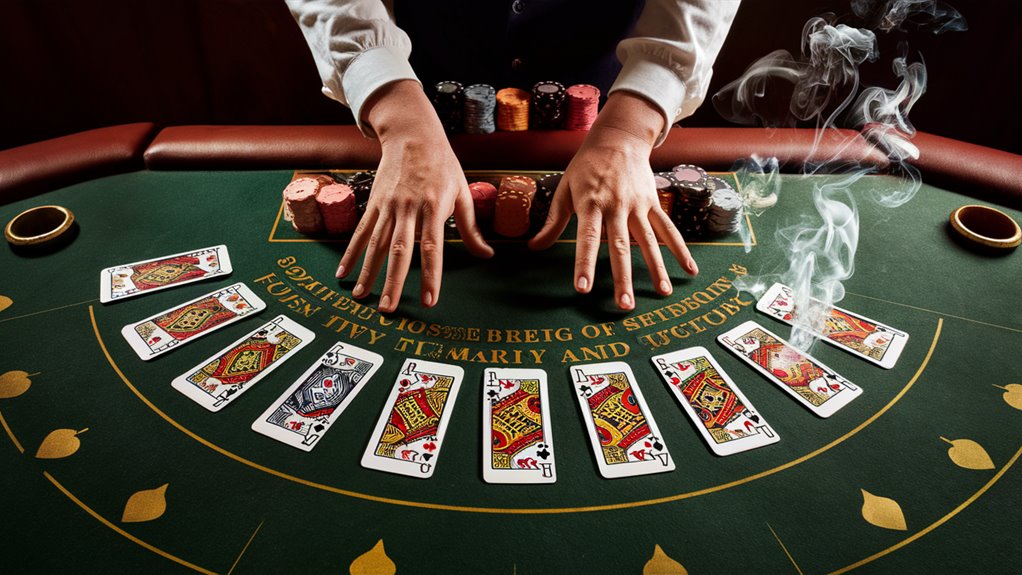
Optimal table positioning creates significant advantages through carefully chosen sightlines and strategic seat selection.
The first base position (far left) provides a crucial 45-degree viewing angle of dealing mechanics, enabling players to observe natural card distribution patterns and dealing sequences with maximum clarity.
Key Position-Based Advantages
First Base Position
- Clear sight lines of dealer mechanics
- Enhanced viewing angles for card distribution
- Optimal observation of natural dealing patterns
Center Position Benefits
- Superior visibility of overall table flow
- Balanced perspective of all gameplay elements
- Clear view of card removal procedures
Third Base Position
- Advantageous angle for observing dealing sequence
- Strategic placement for gameplay timing
- Enhanced visibility of card handling
Maximizing Position Advantages
Table selection factors should include dealer handedness, lighting configuration, and equipment placement.
Position-based strategies become most effective when synchronized with precise timing and calculated betting patterns.
Right-handed dealer scenarios particularly benefit from first base seating during card distribution phases.
## Frequently Asked Questions
Q: Which table position offers the best overall advantage?
A: First base typically provides optimal viewing angles and strategic benefits for most players.
Q: How does dealer handedness affect positioning strategy?
A: Right-handed dealers create different card handling patterns that can be better observed from specific positions.
Q: What role does lighting play in position selection?
A: Overhead lighting angles significantly impact card visibility and should influence seat choice.
Q: Why is center position considered advantageous?
A: Center positions offer balanced visibility of dealing mechanics and overall table operations.
Q: How do position advantages vary by game type?
A: Different casino games create unique positional advantages based on dealing patterns and game mechanics.